
‘The concept of citizen journalism … is based
upon public citizens "playing an active role in the process of collecting,
reporting, analyzing, and disseminating news and information."’
(Wikipedia, http://en.wikipedia.org/wiki/Citizen_journalism)
(Wikipedia, http://en.wikipedia.org/wiki/Citizen_journalism)
 |
| Photo by Roger H. Goun (http://www.flickr.com/photos/sskennel/) |
In the age of information, nearly everybody wants to say
something - and people are more enabled than ever to record, write and publish
their own journalistic pieces for the world to see. When an amateur, or
non-professional produces information of journalistic nature, it is sometimes
referred to as citizen journalism.
A debate exists among various socialists and academics about
whether or not citizen journalism is a good thing for our society and there are
some strong arguments to support each viewpoint.
For one thing, there is the question of trust in the
information provided. News from citizen journalists sometimes present opinion
as fact. Yet, any individual who boots up a computer can publish an article
with the same potential visibility as any large news organization.
We have come to trust the more traditional media sources
because they are held accountable for the legitimacy of their information by
the public and by law. They check and double-check their facts, confirming
their truthfulness before ever publishing an article.
Citizen journalists rarely have their facts checked before
publishing, so the validity of their information is often uncertain, and we
can’t hold them accountable to the same standard that we have for larger organizations.
This would be dangerous except that, if something is
“important” enough, people instantly start talking about it to each other on
social media sites, blogs, forums, chat apps and more and you can be sure there
will be somebody among the hundreds or thousands of people who see this
information who will go to the effort of checking the facts. If proof - for or against the facts - is
found, links to any related information can then be attached to the original post
or article via commenting or “sharing” and disseminated back through the same
network from which the information originated.
This same phenomenon is pushing the bigger news organizations
to be more responsible than ever with their information. Just as obscure indie
journalists are automatically fact-checked, news organizations are also being
scrutinized. They must produce rock solid facts to ensure that they are looking
out for the interests of their readers. Otherwise, readers will simply go
elsewhere for their news.
But, trust isn’t the only factor in the debate. There are
other considerations. Citizen journalists are not required to attain any kind
of certification. All they need is a computer, a subject and an internet
connection to begin reporting. As a result, poor grammar, spelling and
structure veritably litter many of the articles we now read. Since we often
learn writing styles through reading, this can perpetuate into more unclear and/or inaccurate writing.
That said, while the above said issue is close to the heart
for this author, it must be conceded that the above concern for the quality of
grammar is mostly vanity. When faced with the next element of the debate to be
discussed, citizen journalism as a political device, grammar is not exactly a
priority.
Events are happening in the world that certain governments
wouldn’t allow traditional media access to, given the choice. China, North
Korea and many other countries around the world have strict rules about what
their citizens can publish or read.
The Syrian government is attacking its own people, starving
them and shooting unarmed citizens down in the streets and, while the more
gruesome clips are not easily available, they do exist. Renegade ‘citizen
journalists’ gather footage for the world in an effort to help the Syrian people
(“Al Jazeera exclusive: Homs under siege”, Al Jazeera English, YouTube.com, see http://www.youtube.com/watch?v=PMAgeCpr8t4)
We are aware of this information because
of people like these who desperately risk everything in order to gather
footage, crying out for help. Their offerings attract food contributions and
other assistance from outside sympathizers that might otherwise have been in
the dark about what is happening to real people in war-torn countries.
‘iReport’ by CNN is an online repository for citizen
journalists to submit articles that CNN can republish about subjects that are
often truly important from a human perspective. Encouragement from a survivor of
extreme bullying (http://ireport.cnn.com/docs/DOC-1047896)
and inspiration from a once-bullied teacher (http://ireport.cnn.com/docs/DOC-1048465)
are some of the things you might find when CNN requests that their user base
submits stories about bullying.
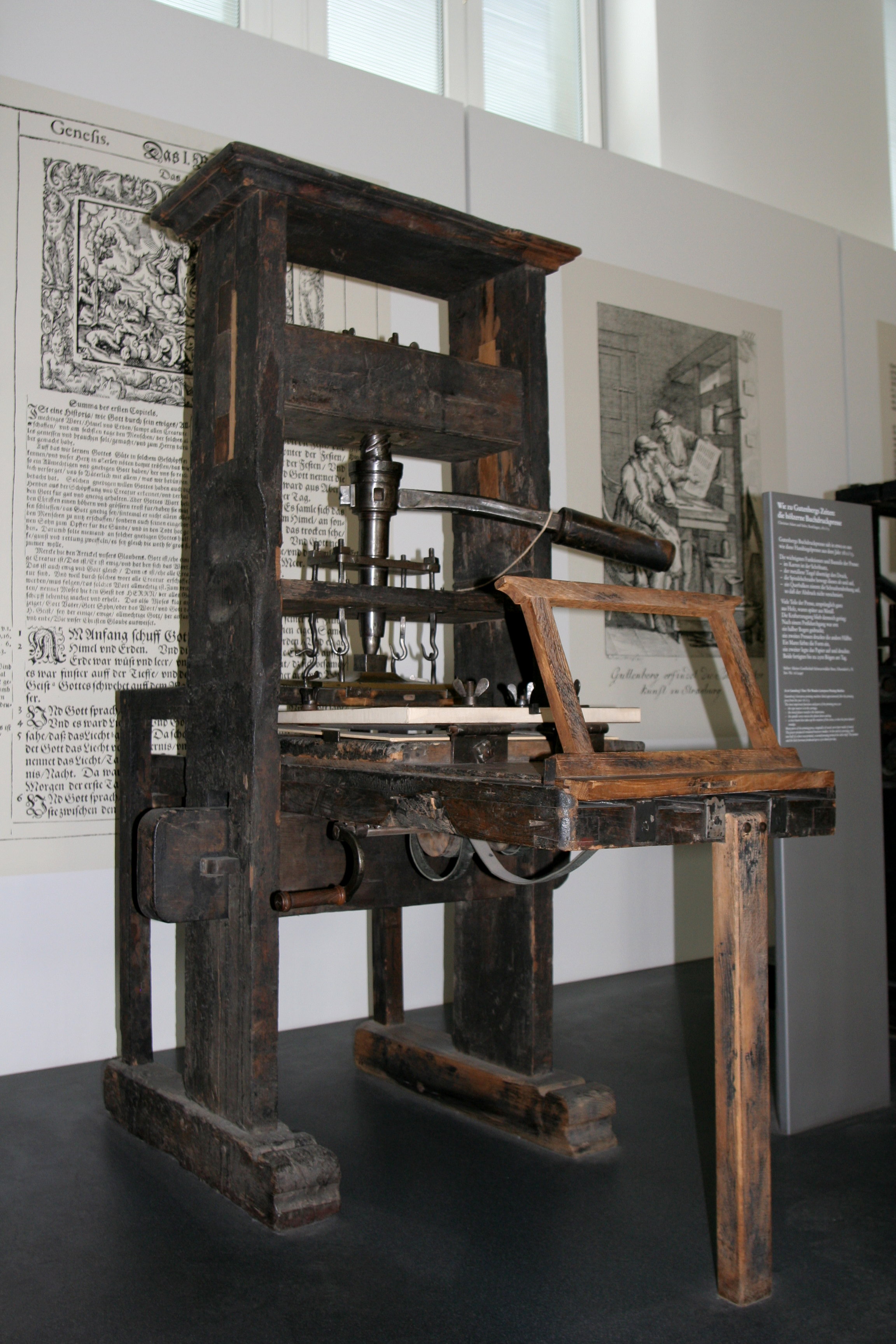 |
| Early printing press machine, one of the first technologies used for citizen journalism purposesImage provided by Wikimedia (http://upload.wikimedia.org/wikipedia/commons/1/17/ Handtiegelpresse_von_1811.jpg) |
While citizen written articles are often not as high quality
as we would expect from those of us with higher education, they give us far
more access to information than we once would have had. As more people begin to
use social media tools to publish and read their news, larger organizations are
pushed to be more responsible and society can begin to hold even entire
countries accountable for their actions.
So, on the whole, this author believes that with citizen
journalism the positive outcomes outweigh the relatively minor losses. Of
course, this is opinion, so feel free to fact check if you feel so inclined.


No comments:
Post a Comment